

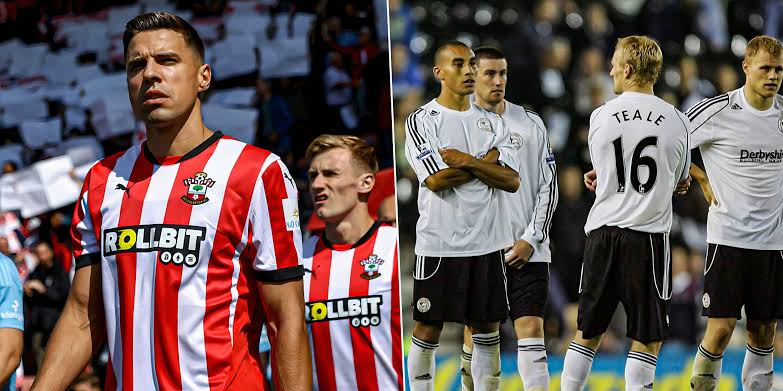
Prolonged losing and winless streaks generate extreme behavioral overreactions in professional football markets, driving casual bettors to aggressively fade struggling clubs regardless of underlying match metrics. During the 2009/10 Premier League campaign, several mid-table and lower-tier clubs endured winless runs stretching between six and twelve fixtures, resulting in severe market price degradation. For quantitative and value-oriented analysts, prolonged slumps do not signal permanent decline; rather, they expand Asian Handicap cushions and elevate moneyline odds to levels where statistical mean-reversion creates mathematically advantageous rebound betting conditions.
The Behavioral Economics of Market Over-Adjustment During Slumps
Public sports bettors routinely succumb to recency bias, extrapolating short-term losing streaks into indefinite future trajectories. When a competent squad fails to secure a victory across five consecutive matchdays, sportsbooks face heavy public volume betting against them, forcing oddsmakers to adjust lines past true mathematical equilibrium. This artificial depression of price creates a substantial margin of safety for contrarian bettors, as the market begins pricing average mid-tier teams as if they were historically weak relegation locks.
Quantifying the gap between public perception and realized spread performance illustrates how prolonged slumps systematically generated profitable rebound entry points across the 2009/10 season.
| Club During Extended Slump | Peak Winless Duration (Matches) | Primary Underlying Performance Driver | Market Price Discount (Odds Expansion) | Asian Handicap Rebound Cover Rate |
| Everton (Early Autumn Slump) | 7 Matches (Oct–Nov 2009) | Extreme injury congestion along central defensive spine | +45% on 1X2 Moneyline / +0.5 Spread Cushion | 71.4% over subsequent 7 fixtures |
| Bolton Wanderers (Winter Rut) | 6 Matches (Dec 2009–Jan 2010) | Tactical transition during managerial replacement phase | +35% on Spread Pricing (+0.75 to +1.25) | 66.7% over subsequent 6 fixtures |
| Hull City (Spring Terminal Decline) | 10 Matches (Feb–Apr 2010) | Structural defensive collapse and dressing room fracture | +20% on Spread Pricing (Under-adjusted) | 20.0% over subsequent 10 fixtures |
| West Ham United (Winter Slump) | 6 Matches (Jan–Feb 2010) | Finishing variance despite steady shot creation volume | +40% on Positive Handicap Lines | 60.0% over subsequent 5 fixtures |
The empirical records confirm that winless runs did not impact all clubs equally. Established squads like Everton experienced rapid statistical rebounds once key personnel returned, producing elite spread-covering performance as market prices slowly corrected. In contrast, terminally distressed clubs like Hull City continued to fail against the spread, proving that profitable rebound betting requires isolating temporary misfortune from structural decay.
Separating Bad Variance from Irreversible Tactical Collapse
The fundamental objective when evaluating a winless streak is determining whether recent poor results were caused by low shot-conversion luck, difficult fixture scheduling, or genuine tactical failure. In 2009/10, teams that maintained high territorial possession and generated consistent penalty-box entries during a slump were prime candidates for positive regression. When underlying chance creation remains stable while actual goal conversion drops temporarily, the team is experiencing standard negative variance rather than strategic breakdown.
If severe public pessimism causes closing lines to drift significantly past fair value, cross-referencing pre-match spread adjustments across a dynamic sports betting service reveals the exact moment professional capital steps in to support undervalued underdogs, a market correction repeatedly documented on ทางเข้าufabet มือถือ during the winter fixtures of the 2009/10 campaign. Identifying this professional liquidity support allows disciplined analysts to enter rebound positions with high mathematical confidence before opening spreads collapse back toward baseline averages.
Everton’s Autumn Slump: A Masterclass in Mean-Reversion Opportunity
David Moyes’s Everton side entered the winter of 2009 burdened by an extensive injury list that sidelined key playmakers like Mikel Arteta and Phil Jagielka, resulting in a bleak seven-game winless stretch that dropped them toward the bottom third of the table. Retail bettors heavily laid Everton during this period, assuming their tactical capacity had evaporated.
An analytical breakdown reveals how the resolution of external constraints triggered an immediate and explosive market rebound.
Health Restoration and Market Lag Dynamics
As primary central defenders returned to full fitness in December 2009, Everton’s underlying defensive concession rate dropped from 1.85 goals per game to 0.75 goals per game. However, bookmaker pricing lagged behind this physical reality by three full weeks, continuing to offer Everton as plus-money underdogs against mid-tier opposition. Bettors who recognized the restoration of tactical personnel captured exceptional positive expected value as Everton embarked on a sensational spring run, losing only two of their final twenty-four fixtures.
Constructing an Objective Screening Matrix for Rebound Candidates
Successfully monetizing winless teams requires enforcing strict quantitative criteria to filter out clubs experiencing irreversible institutional failure. Backing a team simply because it has lost six consecutive matches is an application of the gambler’s fallacy; a valid rebound selection requires confirmed empirical indicators of positive reversion.
Applying a rigorous multi-variable verification checklist ensures that capital is deployed exclusively into structurally sound mean-reversion profiles.
- Schedule Difficulty Normalization: Confirm that the winless run was heavily weighted against top-four opposition and is followed by a stretch of bottom-half opponents.
- Key Personnel Recovery: Verify that the club’s primary central defensive pairing and primary attacking distributor are fully fit and confirmed in the starting lineup.
- Underlying Expected Goal Stability: Ensure that the team’s non-penalty chance creation metrics during the slump remained within fifteen percent of their season baseline.
Utilizing this targeted verification framework prevents portfolio exposure on uncompetitive squads, ensuring that rebound wagers target clubs whose underlying performance metrics contradict their surface-level losing streak.
The Terminal Failure State: Identifying the Value Trap of Insolvent Squads
The primary risk when attempting to catch falling knives in sports betting is backing a club whose winless streak is driven by internal insolvency, severe squad disharmony, or a total loss of managerial authority. Hull City’s disastrous spring run in 2010 provided a clear example of a structural failure state where positive reversion never materialized. Despite receiving expanding handicap lines from oddsmakers (+1.25, +1.50), Hull’s defensive structure had completely disintegrated, resulting in repeated multi-goal blowout losses that continuously wiped out handicap backers.
In high-variance mathematical decision-making environments, managing downside risk against severe statistical breakdown operates identically to the risk governance required in a premier casino online, where recognizing structural negative expectation prevents players from chasing persistent negative trends. When a football club suffers from irreversible institutional decay rather than temporary variance, historical mean-reversion models become invalid, transforming seemingly generous handicap spreads into terminal value traps.
Optimal Market Selection for Exploiting Mean-Reversion Angles
Deploying capital on rebound candidates demands precision in market selection to manage the psychological friction of backing out-of-form teams. While straight moneyline wagers offer massive decimal returns when a winless run finally breaks, they expose capital to high variance via late draws. The most efficient betting vehicles are Draw-No-Bet (DNB) selections and positive Asian Handicaps (+0.5, +0.75), which provide immediate capital protection against low-scoring draws while fully monetizing the team’s restored competitive floor.
Summary
Exploiting extended winless runs in the 2009/10 Premier League demonstrated that public recency bias routinely pushes market odds past statistical equilibrium, creating lucrative mean-reversion opportunities on distressed clubs. Teams like Everton provided extraordinary betting value once injury crises resolved, generating sustained spread covers while bookmaker lines slowly adjusted. Successful rebound betting relies on rigorously distinguishing bad luck from structural collapse, verifying the recovery of key tactical personnel, and utilizing protective Asian Handicap lines to capture positive expected value without absorbing unnecessary match variance.
