

Few moments in online gambling are as irritating as a first withdrawal that does not simply go through. A player has deposited without fuss, finished ahead, pressed “withdraw”, and then received an email asking for a passport copy, a recent utility bill and perhaps a bank statement. To the player it can feel arbitrary. In reality it is the visible edge of two regulatory frameworks that every licensed operator is bound by.
This explainer sets out what those frameworks are, why the first withdrawal is the point where they tend to bite, how automated and manual review differ, where delays usually come from, and why the open-banking identification used across the Finnish market has shortened the whole process so dramatically that the Finnish phrase Nopea kotiutus kasino (fast-withdrawal casino) now describes a realistic expectation rather than a marketing slogan.
KYC and AML in Plain Terms
KYC stands for “know your customer”. It is the obligation on a regulated business to establish that a customer is who they say they are, that they are old enough to use the service, and that they live where they claim to live. For a casino this means confirming identity, age and address before significant funds are paid out.
AML stands for “anti-money laundering”. These rules exist to stop criminal money being passed through legitimate businesses to come out looking clean. A casino is an obvious candidate for abuse, because money goes in, is gambled briefly, and comes out as “winnings”. AML obligations therefore require operators to monitor transaction patterns, to understand where unusually large sums originate, and to report anything that looks wrong.
Both sets of rules come from the operator’s licensing authority and wider European legislation. An operator licensed in Malta or Estonia is bound by them regardless of where its players live, and one that skipped them would be risking its licence.
Why the First Withdrawal Is the Trigger
Players often ask why the casino took their money without checks but wants documents before returning it. The logic is about risk. Taking a deposit from an unverified person exposes the operator to little regulatory danger. Paying out to an unverified person is the moment at which it could, unknowingly, be completing a laundering cycle or paying a minor. So verification is concentrated at the point of exit.
There is also a practical reason. Many casual players never withdraw at all, so verifying every account at sign-up would add friction for no benefit. Once the first verification is complete, later withdrawals are usually faster, although periodic re-verification can occur if a document expires or activity changes markedly.
The Documents Casinos Typically Ask For
The exact list varies, but requests cluster around three categories.
- Proof of identity. A passport, national identity card or driving licence. The image must usually show all four corners, be in colour and be legible, with no glare over the photograph or the machine-readable zone.
- Proof of address. A utility bill, bank statement or official letter dated within the last three months or so, showing the same name and the address on the account.
- Proof of payment method. For card deposits, a photo of the card with the middle digits covered; for e-wallets, a screenshot of the wallet account showing the holder’s name and email.
A fourth category, source of funds or source of wealth, is less common but more intrusive. It is requested when deposits are large relative to what the operator would expect, or when activity patterns look unusual. Acceptable evidence typically includes payslips, tax returns, bank statements showing salary payments, or documents relating to a property sale or inheritance. This is where AML rather than KYC is doing the work.
Automated Review Versus Manual Review
How quickly documents are processed depends heavily on whether a human needs to look at them.
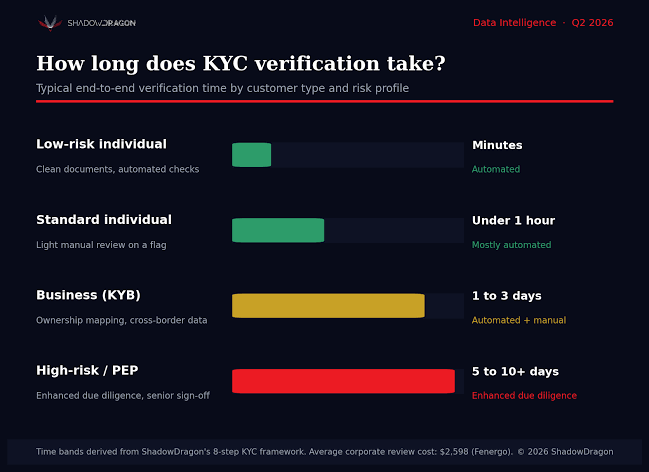
Automated review uses document-recognition software to read the text on an identity document, check its security features against known templates, compare the photograph to a selfie if one was requested, and match the extracted name and date of birth to the account. Address documents can be checked for date, name and address fields. When everything lines up, approval can be almost instant.
Manual review happens when the software is unsure, when the document type is unusual, when the image quality is poor, or when the account has been flagged for some other reason. A compliance officer looks at the file, possibly asks for an additional document, and makes a decision. This is where delays of one to several business days creep in, and it is why uploading a sharp, complete, well-lit image the first time matters so much.
Many operators run a hybrid: automated checks first, with anything below a confidence threshold escalated to a person. The difference between a ten-minute approval and a three-day wait is very often that threshold.
Common Causes of Delay
Across the industry the same handful of problems account for most stalled first withdrawals.
- Mismatched details. The name on the account was typed slightly differently from the name on the passport, or the address on the bill is an old one.
- Poor images. Cropped corners, blur, glare, or a screenshot where an original was required.
- Expired or out-of-date documents. A bill from eight months ago, or an identity card that has lapsed.
- Payment method not in the player’s name. Depositing from a partner’s card or a shared account almost always triggers a manual hold, because operators must ensure money returns to the person who sent it.
- Bonus-related checks. If a withdrawal includes bonus winnings, the operator may review play history to confirm wagering requirements and maximum-bet rules were met before releasing funds.
- Weekend and holiday timing. Compliance teams are often smaller or absent outside business hours, so a file submitted on a Friday evening may not be opened until Monday.
How Open-Banking Identification Changed the Picture
In Finland and the wider Nordic region, a large share of the verification burden has been removed by a different approach. When a player deposits via an open-banking provider such as Trustly or Zimpler, they authenticate with their own bank’s strong customer authentication. The bank has already verified that person’s identity to a very high standard, and the payment provider passes verified name, date of birth and account details to the casino at the moment of the first deposit.
For the operator, this satisfies the core KYC requirement before the player has even seen the lobby. For the player, it means the first withdrawal is far less likely to be interrupted by a document request. The money simply returns to the same bank account it came from, through the same rail, and comparison services that measure payout times routinely record such withdrawals completing in minutes, versus the one to three business days typical of Visa and Mastercard payouts.
It is important to be accurate about what this does and does not replace. Bank identification handles identity and age. It does not switch off AML monitoring. A player who deposits unusually large sums, or whose pattern of play looks irregular, may still be asked for source-of-funds evidence. What has changed is that routine players, depositing and withdrawing modest amounts, now rarely encounter any manual step at all.
A Practical Checklist for a Smooth First Payout
- Where possible, deposit via bank identification rather than a card or wallet, so identity is verified from the outset.
- Ensure every detail on the account matches your official documents, including spelling and address.
- Use only payment methods held in your own name.
- If documents are requested, photograph the originals in good light with all edges visible, and send them promptly.
- If you accepted a bonus, confirm you have met the wagering requirement and stayed within any maximum-bet rule before requesting a withdrawal.
- Submit during business hours where you can, and keep a note of ticket numbers if you contact support.
Choosing where to play also matters. Comparison services such as Kotiuta publish measured withdrawal times alongside licence information, which gives a reasonable indication of how efficient an operator’s verification and payout process actually is in practice rather than on paper. For Finnish players there is a further consideration: winnings from operators licensed within the EU or EEA are generally tax-free in Finland, whereas winnings from operators licensed elsewhere are taxable, so licence type is worth checking at the same time.
Verification and Responsible Play
It is easy to see KYC and AML purely as obstacles, but they also protect players. Age verification keeps minors out, payment-method matching stops a stolen card funding an account someone else cashes out, and source-of-funds questions are one of the few points at which an operator is obliged to notice that someone is gambling with money they cannot afford to lose.
That last point deserves a plain statement. Online casino play is for adults aged 18 and over and should be treated as paid entertainment, never as a way to earn money. Setting deposit and loss limits before playing, using the session-reminder tools operators provide, and knowing that self-exclusion and blocking services exist are sensible habits for anyone, regardless of how fast their withdrawals arrive.
Conclusion
Verification at the first withdrawal is the point at which licensing rules require an operator to be certain who it is paying. Preparing clean documents and matching account details to official records will get most players through in hours rather than days. In the Finnish market, open-banking identification has gone further still, moving the bulk of the check to the first deposit and turning a fast withdrawal from a hope into a routine.
