
Introduction
Choosing the right domain name is one of the first and most important steps in building a successful website. A domain name represents your online identity, helps visitors find your website, and contributes to how people recognize your brand. However, selecting a domain name involves more than choosing a memorable word or business name. You also need to consider its domain extension.
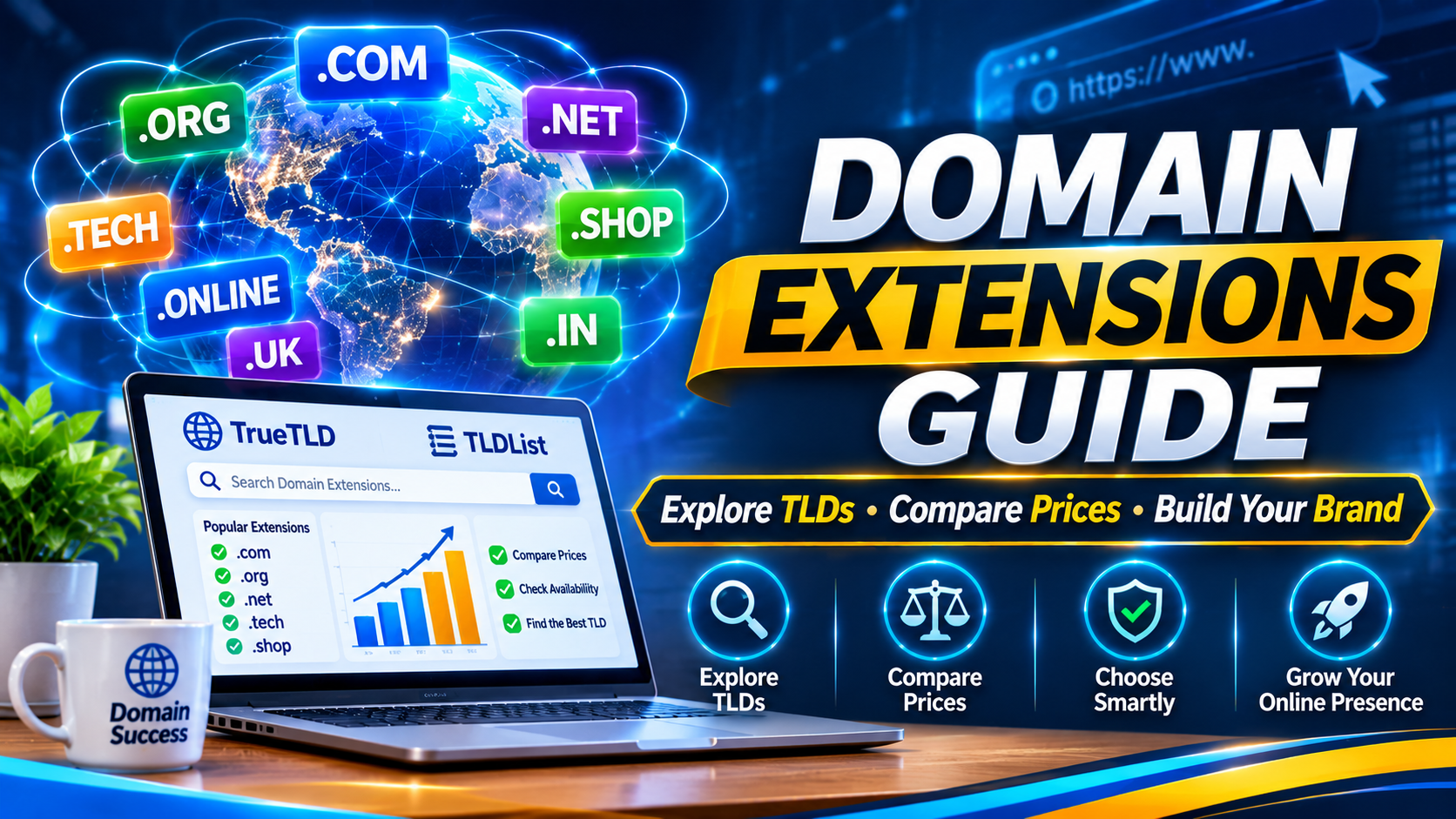
Domain extensions, also known as Top-Level Domains (TLDs), are the letters that appear after the final dot in a web address. Common examples include .com, .net, and .org, while newer options include .shop, .online, .tech, and .design. Each extension can serve a different purpose, audience, or branding strategy.
With so many extensions available, finding the right one can become confusing. This is where resources such as Truetld and Tldlist can make domain research easier. They help website owners explore available extensions, understand their options, and make more informed decisions before registering a domain.
In this guide, we will explain everything website owners should know about domain extensions and how these resources can support the domain selection process.
1. What Are Domain Extensions?
A domain extension is the final part of a domain name that appears after the last dot. For example, in the address example.com, “.com” is the domain extension.
Technically, domain extensions are called Top-Level Domains because they occupy the highest level of the Domain Name System (DNS) hierarchy.
Domain extensions help organize domain names into different categories. Some are designed for general use, while others represent countries, industries, communities, or particular types of organizations.
For website owners, choosing an appropriate extension is important because it can influence branding, audience expectations, and the overall appearance of a website address.
2. Different Types of Domain Extensions
Before choosing an extension, it is useful to understand the main categories available.
Generic Top-Level Domains (gTLDs)
Generic Top-Level Domains are extensions that are not specifically associated with a country. Some of the most recognizable examples include:
- .com – Commonly used by businesses and commercial websites.
- .org – Traditionally associated with organizations and nonprofit groups.
- .net – Frequently used by technology and internet-related businesses.
- .info – Often selected for informational websites.
- .biz – Intended for business-related websites.
Newer generic extensions provide even more flexibility. Examples include .store, .online, .website, .app, .blog, and .tech.
These extensions allow website owners to select a domain that communicates something about their website’s purpose.
Country Code Top-Level Domains (ccTLDs)
Country Code Top-Level Domains are generally two-letter extensions associated with specific countries or territories.
Examples include:
- .uk – United Kingdom
- .us – United States
- .in – India
- .pk – Pakistan
- .ca – Canada
- .de – Germany
Businesses targeting a particular country may consider using its country-code extension. However, registration requirements and eligibility rules can vary depending on the extension.
Sponsored and Restricted Domain Extensions
Some extensions are intended for particular industries, communities, or organizations. Certain domains have eligibility requirements that registrants must satisfy.
For example, .edu is associated with eligible educational institutions, while .gov is reserved for qualifying government entities.
Website owners should always check the registration rules before choosing an extension.
3. Why Domain Extensions Matter for Website Owners
A domain extension might look like a small part of a website address, but it can influence several important aspects of an online business.
Brand identity: An appropriate extension can reinforce your business name and make your website address more memorable.
Audience expectations: Visitors may associate particular extensions with specific industries or purposes. A .shop domain, for example, communicates an online shopping focus.
Availability: If your preferred .com domain is already registered, exploring alternative extensions may help you find a suitable address.
Geographic relevance: Country-code extensions can help communicate that a website serves a particular national audience.
Long-term costs: Different extensions can have significantly different registration and renewal prices. Understanding these costs helps website owners avoid unexpected expenses.
The best extension is not necessarily the newest or most unusual. It is the one that fits your website’s goals, audience, budget, and long-term plans.
4. Exploring Domain Extensions Through TrueTLD
TrueTLD is a domain research and price-comparison resource designed to help users understand the actual cost of registering and maintaining domain names.
One important consideration when purchasing a domain is that the advertised first-year price does not always represent its long-term cost.
A registrar might offer a very low introductory price but charge substantially more when the domain comes up for renewal. This can become expensive for website owners who intend to maintain their domains for several years.
TrueTLD helps address this issue by comparing domain pricing across multiple registrars.
Its features include:
- Exploring a large collection of domain extensions.
- Comparing registration prices across registrars.
- Reviewing renewal costs.
- Examining estimated ownership costs over multiple years.
- Identifying pricing differences between providers.
For example, someone planning to launch a technology website might compare .com, .net, and .tech. Rather than choosing an extension based only on its introductory price, they can examine the longer-term financial commitment.
This makes TrueTLD particularly useful for entrepreneurs, bloggers, developers, and businesses that want to make cost-conscious domain decisions.
5. Understanding TLDList and Its Role in Domain Research
TLDList is another useful resource for people who want to explore the wide range of domain extensions available on the internet.
A domain extension directory can help website owners understand which extensions exist, how they are categorized, and which alternatives might be suitable for a particular project.
Instead of limiting your search to familiar options such as .com and .net, exploring a TLD directory can introduce you to extensions that better communicate your website’s purpose.
For example:
- .design may suit a creative portfolio.
- .photography may be relevant to a photography business.
- .shop may work for an online retail brand.
- .tech may appeal to technology-focused projects.
- .blog may be suitable for content publishers.
- .online may offer a flexible option for a general web presence.
TLDList can be approached as a domain discovery resource, while TrueTLD can support the pricing-comparison stage.
Website owners should verify current availability, registration restrictions, and prices with the relevant registrar before making a purchase.
6. TrueTLD vs. TLDList: Understanding the Difference
Although both resources relate to domain extensions, they can serve different purposes during the research process.
TrueTLD focuses on comparing domain registration and renewal costs. Its pricing information can help users understand how much a domain may cost over time.
TLDList is useful as a reference point for discovering and learning about different domain extensions.
The two approaches complement each other:
Use TLDList for discovery: Explore different extensions and identify possibilities that match your website’s niche or branding strategy.
Use TrueTLD for price research: Compare the costs associated with your shortlisted extensions and review renewal expenses.
For example, imagine you are starting an online store. You might discover .shop through a domain extension directory and compare its pricing with .com through TrueTLD. You can then consider branding, customer familiarity, and long-term affordability before making your decision.
Using both resources as part of your research process can help you make a more informed choice.
7. How to Choose the Right Domain Extension
Selecting an extension should involve more than personal preference. Consider the following factors before registering your domain.
Understand Your Website’s Purpose
Start by identifying what your website will offer. A business website, personal portfolio, online store, educational resource, and technology blog may have different domain requirements.
Choose an extension that makes sense for the purpose of your project.
Consider Your Target Audience
Think about the people who will visit your website. If your audience is primarily located in one country, a relevant country-code extension might be worth considering.
If your website targets an international audience, a widely recognized generic extension may be more appropriate.
Keep Your Domain Memorable
Your complete domain name should be easy to pronounce, spell, and remember. Avoid unnecessarily complicated combinations of words, numbers, or hyphens.
A simple domain is generally easier to communicate through advertisements, social media, and word of mouth.
Check Registration and Renewal Prices
Never evaluate a domain using only its first-year registration fee.
Review the renewal price, applicable taxes, transfer costs, and any additional services you may need. A domain that initially appears inexpensive could become costly over time.
Research Registration Requirements
Some extensions have special eligibility conditions or registration policies. Check these requirements before purchasing.
You should also review the registrar’s terms, privacy options, and domain management services.
8. Do Domain Extensions Affect SEO?
One of the most common questions website owners ask is whether a particular domain extension improves search engine rankings.
Generally, choosing .com over .net or selecting a newer extension such as .online does not automatically provide a search ranking advantage.
Search engines consider many factors when evaluating websites, including content quality, relevance, usability, website performance, and the overall experience offered to visitors.
However, domain extensions can influence how people perceive a website and whether they feel comfortable visiting it. A relevant, recognizable domain can support branding and may help users remember your website.
Country-code extensions can also communicate geographic relevance. Their potential usefulness depends on your target market and search strategy.
Therefore, choose an extension that supports your website’s identity rather than relying on it as an SEO shortcut.
9. Common Domain Extension Mistakes to Avoid
Even experienced website owners can make mistakes when selecting domains. Here are some common issues to watch out for.
Choosing based only on the introductory price: Always compare renewal prices and longer-term ownership costs.
Ignoring brand consistency: Your domain should fit your business name and overall identity.
Selecting an unnecessarily complicated extension: An unfamiliar extension may require additional explanation when shared with potential visitors.
Overlooking registration restrictions: Some extensions have special eligibility requirements.
Forgetting about trademark considerations: Before registering a domain, check whether the name could conflict with an existing trademark or brand.
Ignoring domain security: Enable appropriate account security, use strong passwords, and activate available domain protection features.
Avoiding these mistakes can save time, money, and unnecessary complications later.
10. A Practical Domain Research Strategy
Website owners can simplify the domain selection process by following a structured approach.
- Write down your website or business name.
- Identify your primary audience and target market.
- Shortlist several relevant domain extensions.
- Explore available options through TLDList.
- Compare registration and renewal prices through TrueTLD.
- Check the registration requirements for your preferred extension.
- Review trademark considerations and potential brand conflicts.
- Select a reputable registrar and carefully review its terms.
- Register the domain and configure its DNS settings.
- Set up renewal reminders and secure your registrar account.
This process helps ensure that your domain selection is based on practical considerations rather than a quick purchasing decision.
11. The Importance of Long-Term Domain Management
Registering a domain is only the beginning. Website owners also need to manage their domains properly to maintain a reliable online presence.
Keep your registration contact information accurate, monitor renewal dates, and enable automatic renewal when appropriate. Make sure you retain access to your registrar account and understand how domain transfers work.
It is also important to configure DNS records correctly. These records help connect your domain with website hosting, email services, and other online tools.
If you operate a business, consider whether registering closely related domain variations or relevant alternative extensions would help protect your brand. Make these decisions carefully and within your budget.
Long-term domain management helps reduce the risk of accidental expiration, service interruptions, and avoidable administrative problems.
Conclusion
Domain extensions play an important role in building a recognizable and effective online presence. From traditional choices such as .com and .org to newer options such as .shop, .tech, and .online, website owners have many possibilities when selecting a domain.
The most suitable extension depends on your website’s purpose, audience, branding requirements, registration conditions, and budget. It is equally important to consider renewal costs rather than focusing exclusively on attractive first-year offers.
Resources such as TLDList and TrueTLD can make this process easier. TLDList can help you explore different domain extensions, while TrueTLD provides useful pricing comparisons across registrars, including registration and renewal costs.
By combining careful research with a clear understanding of your website’s needs, you can choose a domain extension that supports your brand today and remains practical as your website grows. A good domain is more than a web address; it is an important part of your digital identity.
