


Cagrilintide is a long-acting amylin analogue being studied in metabolic research, including research into amylin-related signalling and its interaction with broader metabolic pathways.
For laboratories sourcing Cagrilintide in Canada, the supplier matters as much as the compound itself because identity, batch information, analytical results, and documentation all need to be clear.
Researchers considering Cagrilintide, the practical question is where to find a quality peptide supplier. And that’s the part where Helix Forge will come in as a reliable compound source across Canada.
What is Cagrilintide?
Cagrilintide peptide is an amylin analogue developed as a long-acting research compound. Its pharmacological profile makes it relevant to studies examining amylin signalling and related metabolic pathways.
The compound is also part of an active research and development landscape. Canadian clinical trial records include studies involving Cagrilintide, while Health Canada continues to track regulatory submissions involving Cagrilintide-based products. For laboratory researchers, that activity provides useful context, but it does not change the distinction between a research compound and an approved product.
That distinction should remain clear throughout any sourcing decision. A laboratory reference compound is evaluated according to its identity and analytical documentation, not according to claims about human use.
Why is Cagrilintide relevant to metabolic research?
Cagrilintide is relevant because amylin signalling represents a distinct area of metabolic research. Researchers can examine its activity within experimental models without treating it as interchangeable with compounds that act primarily through other receptor systems.
Current research also includes investigation of Cagrilintide alongside semaglutide. These are different research contexts, and the distinction matters when reviewing product information.
A Cagrilintide compound should not be assumed to represent a combination formulation simply because both compounds appear in the broader development landscape.
For procurement teams, accurate compound identification is therefore the starting point.
What should researchers check before buying Cagrilintide?
The most useful supplier information is specific to the material being considered. A product page can establish what a compound is, but batch-level documentation provides the evidence needed to assess what has actually been supplied.
Here is some of the information you might want to check from a peptide supplier in Canada.
| What to Check | Why It Matters |
| Compound identity | Confirms that the material is identified as the intended research compound |
| Batch or lot number | Connects the material to its supporting documentation |
| Purity result | Shows the reported analytical purity for the relevant material |
| Certificate of Analysis | Provides documented results associated with the batch |
| Analytical testing | Methods such as HPLC or mass spectrometry can provide relevant analytical evidence where applicable |
| Testing laboratory | Identifies the laboratory associated with reported third-party results when available |
| Research-use statement | Establishes that the material is supplied for laboratory and research purposes only |
This is where supplier quality becomes more than a marketing phrase. A researcher reviewing Cagrilintide should be able to distinguish a documented analytical result from a general statement about purity or quality.
Why does a batch-specific CoA matter?
A batch-specific Certificate of Analysis links reported test results to a particular lot of material. That connection is valuable because a generic certificate does not necessarily demonstrate that the results apply to the batch being evaluated.
The CoA should be read alongside the product information. Compound name, batch identifier, reported analytical results, testing details, and laboratory information should form a coherent record.
How does Helix Forge approach Cagrilintide?
Forge Peptides treats documentation as part of the research supply process rather than an afterthought. Its peptide offering is structured around research and laboratory use, with emphasis on traceable information and analytical documentation.
That approach is particularly relevant when a laboratory is comparing peptide suppliers in Canada. The supplier should make it possible to determine what is being purchased and what evidence is available for the specific material.
For Cagrilintide, this means keeping the discussion focused on the compound, its research context, and the documentation supporting the supplied material. It also means avoiding claims that move beyond what the available analytical evidence can establish.
How should Canadian researchers evaluate a peptide supplier?
A useful supplier comparison starts with evidence rather than broad claims about being “high quality.” Researchers can assess a supplier by asking a few straightforward questions.
- Is the compound clearly identified? The product information should leave little room for ambiguity.
- Is the batch traceable? A lot or batch identifier should connect the material to its documentation.
- Is analytical information available? Reported testing should be specific enough to evaluate.
- Is the CoA batch-specific? The documentation should correspond to the material being considered.
- Is the research-only status clear? The supplier should distinguish laboratory research from human or therapeutic use.
This framework applies beyond Cagrilintide. It is equally relevant when evaluating other peptide reference compounds used in metabolic signalling, cellular research, receptor pharmacology, and related laboratory studies.
How can researchers buy Cagrilintide from Helix Forge?
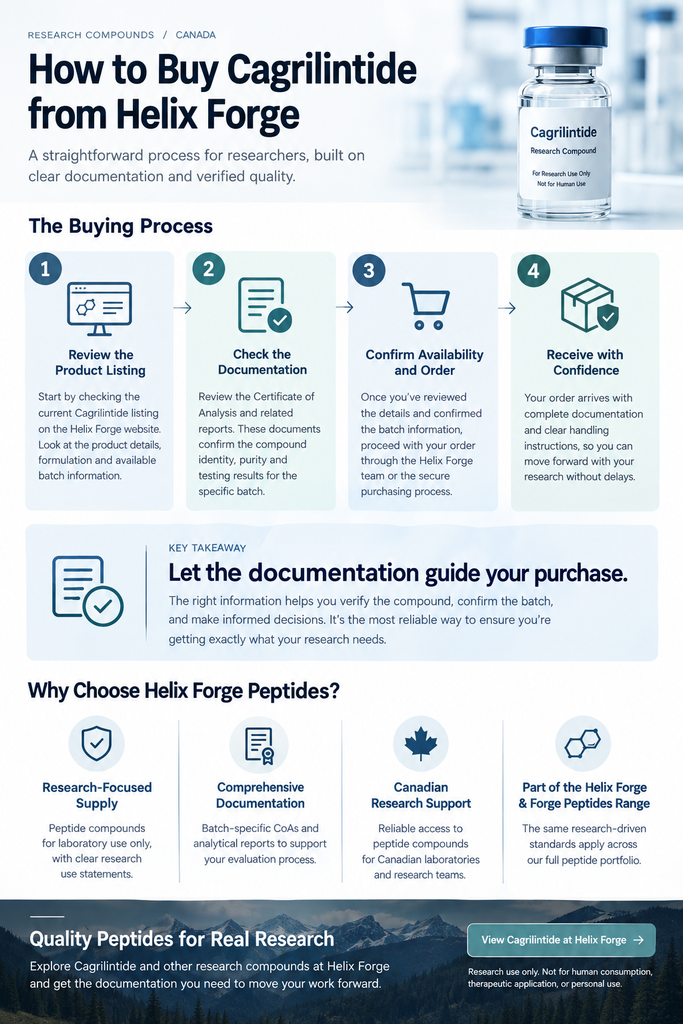
Researchers can begin by reviewing the current Cagrilintide listing from Helix Forge and examining the product information and documentation available for the material.
The important point is that purchasing should follow the documentation, not replace it. A research laboratory evaluating Cagrilintide needs to know what compound is being supplied and what analytical information accompanies that material.
Helix Forge Peptides provides a Canadian research-supply option for laboratories looking for documented peptide compounds. The same research-focused approach applies across the Helix Forge Peptides and Forge Peptides product range.
What makes Helix Forge a research peptide supplier in Canada?
Helix Forge’s value as a Canadian peptide supplier comes from its research-focused positioning and emphasis on documentation. The goal is to give qualified researchers information they can use when assessing compounds for laboratory applications.
For Cagrilintide, that means keeping the product discussion grounded in compound identity, analytical evidence, batch traceability, and appropriate research-use language. It does not require exaggerated claims about what the compound can do.
A supplier becomes more useful to a research team when its documentation can be reviewed before procurement and retained as part of the laboratory’s purchasing records.
Choosing a documented source for Cagrilintide research
Cagrilintide is an active research compound with a growing body of investigation around amylin-related metabolic signalling. For laboratories sourcing it in Canada, the purchasing decision should begin with the material’s identity and supporting documentation.
HelixForge provides research peptides within a documented, research-only framework. Researchers evaluating Cagrilintide can review the current product information and available batch documentation to determine whether the material meets their laboratory’s requirements.
Cagrilintide Research FAQs
Is Cagrilintide a peptide?
Yes. Cagrilintide is a peptide-based amylin analogue being investigated in metabolic research. Its specific identity and analytical characteristics should be confirmed through the relevant supplier documentation.
Is Cagrilintide available for research in Canada?
Cagrilintide is an active area of research in Canada, with Canadian trial records documenting studies involving the compound. Availability of a specific research batch depends on the supplier’s current inventory and should be confirmed directly through the current product information.
What should a laboratory look for when sourcing Cagrilintide?
The primary considerations are compound identity, batch traceability, analytical testing, and a batch-specific Certificate of Analysis. These details provide a more useful basis for supplier evaluation than general claims about peptide quality.
