

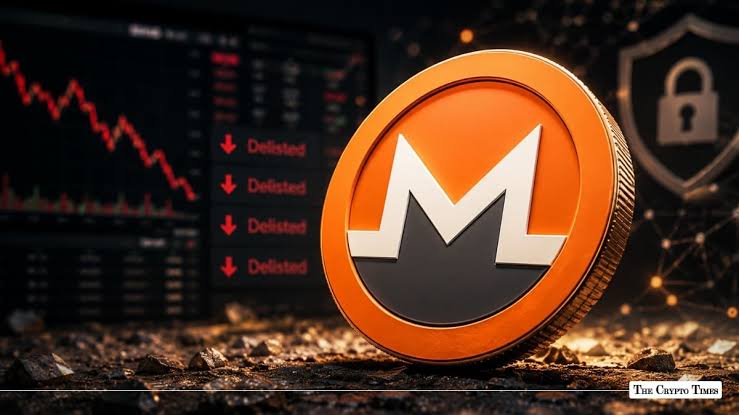
Bitcoin gets the headlines, but among people who care deeply about financial privacy, Monero has always been the quieter favourite. Its transactions hide the sender, the receiver and the amount by default, which makes it uniquely suited to one particular use case: turning digital savings into physical wealth without broadcasting the details to the world. Over the past two years, the option to buy gold with monero has moved from a niche request to a standard checkout option at a handful of specialist bullion dealers. This article explains why that combination makes so much sense, how the process works in practice and what to watch out for.
The Privacy Problem With Most Crypto Purchases
Bitcoin’s ledger is public and permanent. When you pay a merchant in BTC, anyone with the transaction ID can trace the coins backwards through every wallet they have ever touched and forwards to wherever they go next. For a gold purchase, this creates an uncomfortable trail: an observer can see that a specific wallet, possibly one linked to an exchange account in your name, sent a specific amount to a known bullion dealer’s address. From there it is a short step to guessing roughly how much metal you own.
Monero solves this at the protocol level. Ring signatures obscure which input actually funded the transaction, stealth addresses generate a one-time destination for every payment, and RingCT hides the amount. The dealer sees that they were paid; a blockchain observer sees nothing useful. For someone whose entire reason for holding gold is to keep a portion of their wealth out of view, that is the whole point.
Why Gold and Monero Share the Same Philosophy
Gold has always been the privacy asset of the physical world. It has no counterparty, no serial-number registry for most coins and bars, and it does not depend on anyone else’s permission to hold. Monero is the closest digital equivalent: fungible, private and censorship-resistant. Pairing them lets you move value from one private domain to another without an intermediate stop in the transparent banking system.
There is also a diversification argument. Monero is a relatively small-cap asset with high volatility. Gold is one of the least volatile major assets on earth. Converting a portion of XMR gains into bullion during strong periods is a sensible way to lock in value while staying true to a privacy-first approach.
How the Purchase Actually Works
The process is very similar to buying gold with any other cryptocurrency, with a couple of differences that come from Monero’s design.
Choose your product. Decide between coins, bars or vaulted gold based on how you plan to store and eventually sell it. Privacy-minded buyers often lean towards widely recognised one-ounce coins because they can be sold in small quantities to any dealer without paperwork in most countries below the reporting thresholds.
Select Monero at checkout. A crypto-native dealer will display an XMR amount and a payment address, typically an integrated address or a subaddress generated specifically for your order. This is what allows the dealer to match your payment to your order despite the sender being hidden.
Send from a wallet you control. Use the official Monero GUI or CLI wallet, Feather, Cake Wallet or Monerujo. Avoid sending directly from an exchange, both because exchanges often do not support subaddresses correctly and because it defeats the privacy purpose. Paste the address, double-check it and send the exact amount.
Wait for confirmations. Monero blocks arrive roughly every two minutes and most dealers require around ten confirmations, so expect about twenty minutes before the order is marked as paid. A good dealer locks the gold price when you broadcast, not when the last confirmation lands.
Receive your metal. Delivery is handled the same way as any other bullion order: discreet, insured and tracked. If you have chosen vault storage, you will receive an allocation statement instead.
What “Private” Does and Does Not Mean
It is important to be clear about the limits. Paying with Monero keeps the blockchain side of the transaction private. It does not make the dealer invisible. A dealer still needs a delivery address for physical shipments, and in many jurisdictions dealers are required to collect identification above certain purchase thresholds regardless of payment method. Reputable platforms explain their compliance policy up front. A dealer that claims you can buy unlimited quantities with zero information is either misinformed or not planning to be around for long.
What Monero does give you is the assurance that your on-chain activity, your other holdings and your transaction history are not exposed to the dealer, to the delivery company or to anyone analysing the blockchain. That is a meaningful improvement over paying with Bitcoin from a known wallet.
Pricing and Fees to Expect
Gold dealers price in fiat and convert to crypto at checkout, so the XMR amount you pay is driven by two numbers: the gold premium over spot and the XMR exchange rate the dealer applies. Because Monero is less liquid than Bitcoin, some dealers add a slightly wider buffer to the exchange rate. A fair range is within half a percent of the mid-market rate on a major exchange. Anything beyond one or two percent is worth questioning.
Monero network fees are tiny compared with Bitcoin, usually a few cents, which makes it practical to buy even a single fractional coin without the transaction fee eating into the purchase.
Choosing the Right Dealer
Because the pool of dealers accepting Monero is smaller, it pays to be selective. Look for a company that has been accepting crypto for several years, publishes clear product specifications with refiner names, offers both delivery and allocated storage, and has a documented buyback program. Check that their Monero implementation uses subaddresses or integrated addresses rather than a single static address, which would be a sign of an amateur setup.
Specialist platforms built around crypto payments, such as BitGolder, tend to handle these details properly because it is their core business rather than a bolt-on feature.
A Sensible Approach for First-Time Buyers
Start small. Buy a single one-ounce coin or a few fractional pieces with Monero and go through the entire process: payment, confirmation, delivery and inspection. Once you have seen how the dealer performs, scale up. Keep records of what you paid and when, because even privacy-focused investors need to be able to prove provenance when they sell, and most tax authorities treat spending crypto as a taxable event.
Conclusion
Monero and gold are natural allies. One protects privacy in the digital world, the other in the physical one, and moving value between them keeps that protection intact. The process is now straightforward, fees are low, and the number of dealers offering it is growing. If you value discretion as much as you value the metal itself, buying gold with Monero through a platform like bitgolder.com is one of the cleanest ways to convert digital savings into something you can hold in your hand.
