
Artificial Intelligence (AI) is no longer just an emerging technology; it has become a strategic business investment. Organizations across industries are moving beyond experimenting with AI and focusing on how it can deliver measurable business outcomes. From improving operational efficiency to increasing customer engagement, businesses are evaluating AI initiatives based on their ability to generate revenue, reduce costs, and create long-term value.
However, adopting AI does not automatically translate into business growth. Companies need a clear strategy, measurable objectives, and the right technology infrastructure to ensure that their AI investments contribute to business performance.
Moving Beyond AI Adoption to Business Value
Many enterprises have already started implementing AI across their operations, but the real challenge is measuring its business impact. Instead of focusing only on the number of AI tools deployed, organizations are increasingly evaluating metrics such as revenue growth, customer retention, productivity improvements, and operational cost savings.
For example, AI-powered customer analytics can help businesses understand customer preferences, identify purchasing patterns, and deliver more personalized experiences. Similarly, organizations implementing AI Solutions can automate repetitive tasks, improve decision-making, and identify new revenue opportunities.
By connecting AI initiatives with specific business objectives, enterprises can better understand which investments are delivering measurable returns and where further improvements are needed.
Key Metrics Businesses Use to Measure AI ROI
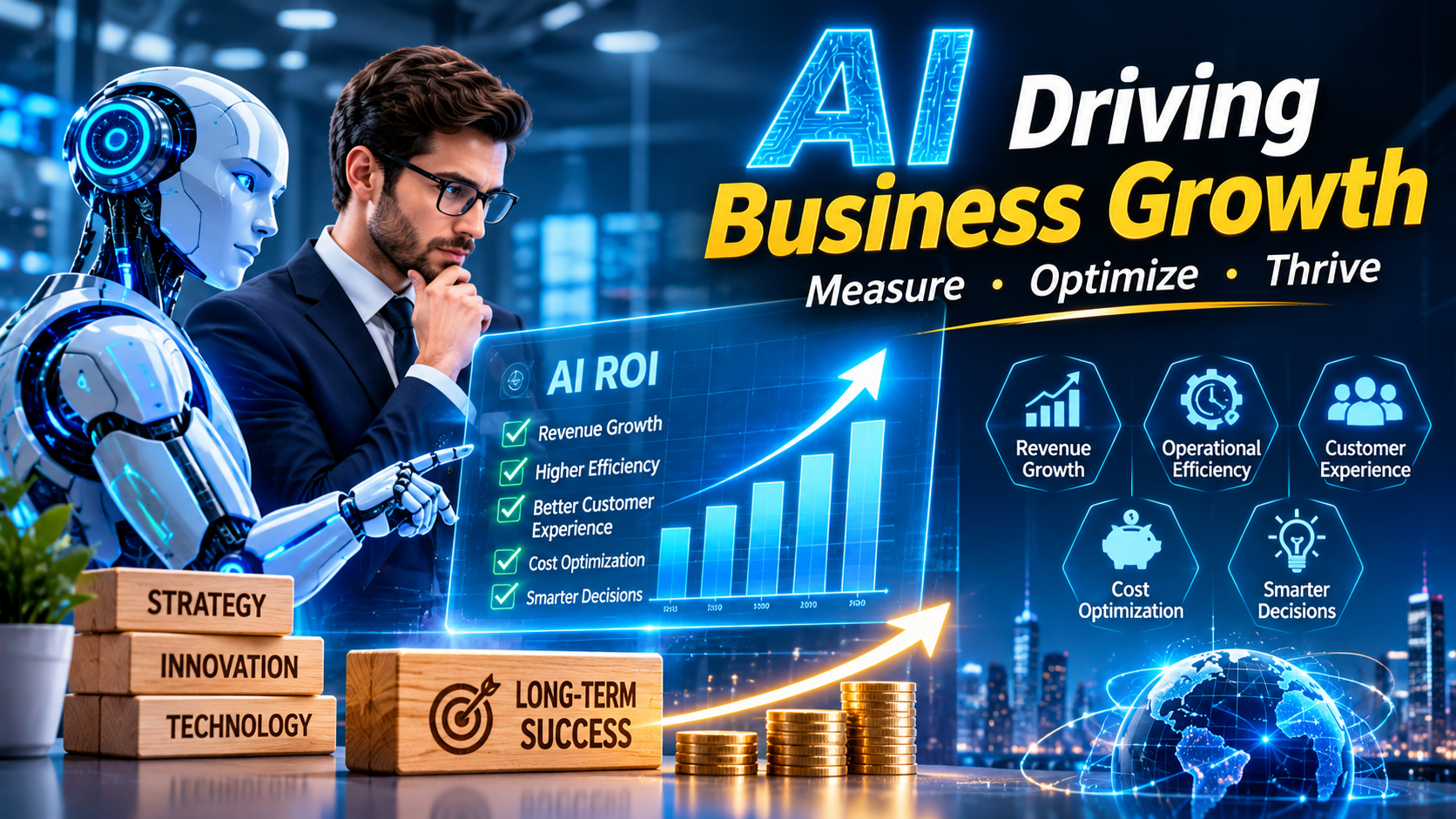
Measuring AI performance requires looking beyond technical indicators and focusing on business outcomes. Some important metrics include:
- Revenue Growth: Evaluating whether AI-powered recommendations, predictive analytics, and personalization contribute to increased sales.
- Operational Efficiency: Measuring improvements in productivity, reduced manual effort, and faster business processes.
- Customer Experience: Tracking customer satisfaction, engagement, retention, and response times.
- Cost Optimization: Identifying savings through automation, resource optimization, and improved workflows.
- Decision-Making Efficiency: Assessing how AI-driven insights help businesses make faster and more informed decisions.
These indicators allow organizations to connect technology investments with tangible financial and operational results.
How AI Is Creating Revenue Opportunities Across Industries
AI is creating new opportunities for businesses to improve services, optimize operations, and develop innovative revenue models.
In healthcare, AI-powered diagnostics, predictive analytics, and automated administrative processes are helping providers improve patient experiences and operational efficiency. Modern healthcare IT solutions also enable healthcare organizations to use data more effectively, supporting better resource allocation and informed decision-making.
In marketing, AI is transforming how businesses attract and retain customers. Data-driven personalization, predictive audience segmentation, and campaign optimization are helping organizations improve conversion rates. Integrating AI with Digital Marketing Solutions enables businesses to identify high-value audiences and make marketing investments more effective.
Similarly, enterprises are investing in robotic process automation solutions to streamline repetitive workflows, reduce operational bottlenecks, and improve employee productivity. These improvements allow teams to focus on higher-value activities that contribute directly to business growth.
Building the Right Technology Foundation for AI Success
Measuring AI impact also requires a strong technology foundation. Businesses need scalable infrastructure, secure data environments, and integrated enterprise systems to support AI adoption.
Cloud Computing and Managed Services play an important role by providing the infrastructure required to deploy, manage, and scale AI applications. They also help organizations optimize technology resources while maintaining performance and operational reliability.
At the same time, cybersecurity remains essential as businesses increasingly depend on AI-driven systems and data. Implementing robust Cybersecurity Solutions helps protect sensitive information, strengthen digital infrastructure, and support responsible AI adoption.
Working with experienced technology partners can further help organizations identify relevant AI use cases, establish performance benchmarks, and align implementation strategies with business priorities. Through AI Consulting Services, enterprises can develop practical AI roadmaps, evaluate investment opportunities, and focus on initiatives that deliver measurable business value.
Turning AI Investments into Sustainable Business Growth
The future of AI-driven business growth will depend on how effectively organizations translate technological capabilities into measurable outcomes. Successful AI adoption requires continuous monitoring, performance evaluation, responsible implementation, and alignment with long-term business goals.
As enterprises move from experimentation to large-scale implementation, LTM helps businesses explore technology-led transformation opportunities through its digital engineering and enterprise technology capabilities. The focus should not simply be on adopting AI but on using it to improve business performance, unlock revenue opportunities, and build a sustainable competitive advantage.
Ultimately, businesses that measure AI success through real business outcomes rather than adoption alone will be better positioned to turn AI investments into lasting value.
