

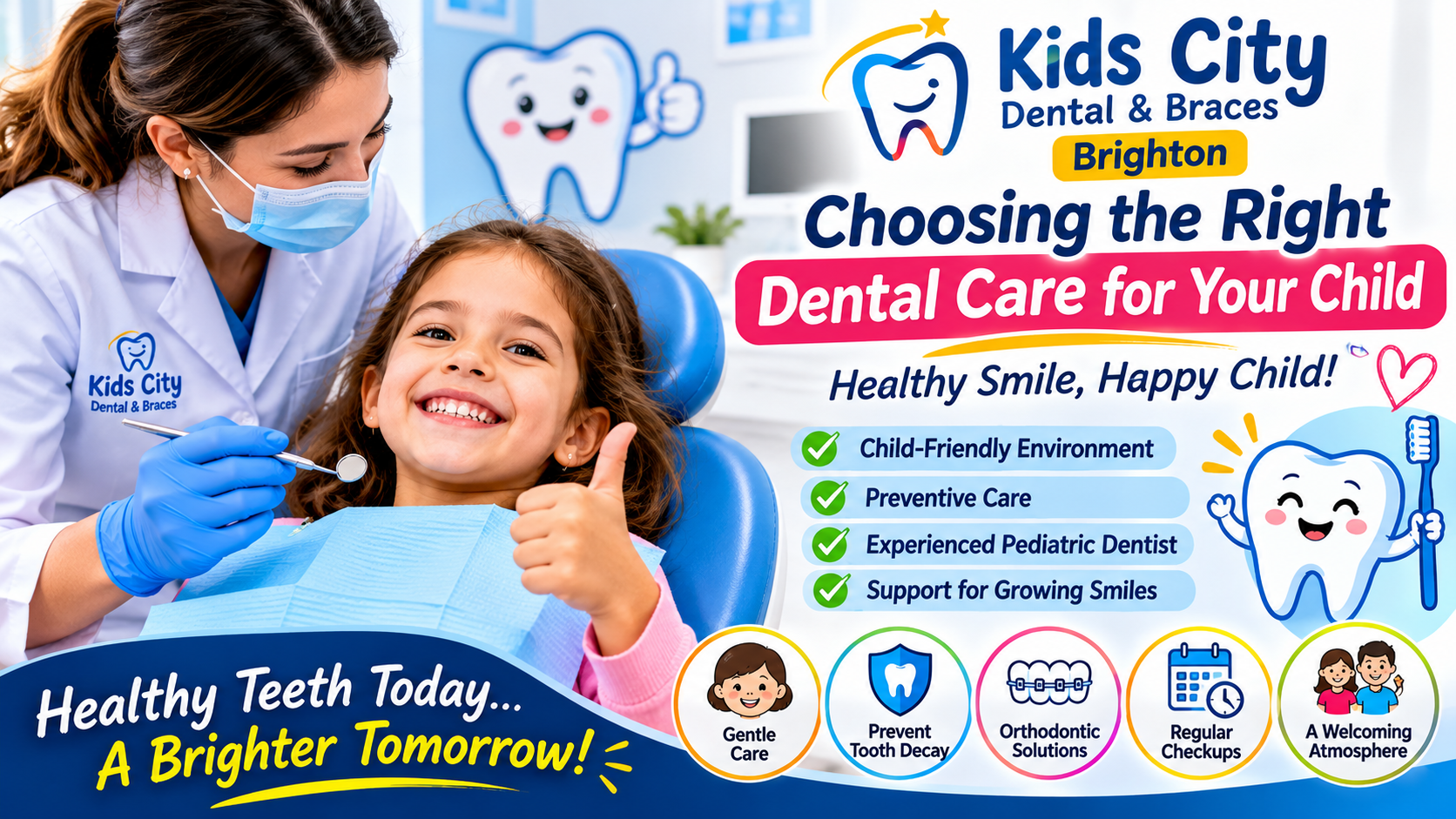
Choosing dental care for a child involves more than finding a convenient location. Parents can look at qualifications, preventive services, communication, and the overall atmosphere when evaluating a practice. Kids City Dental & Braces Brighton can be considered as part of this process when families are assessing pediatric dental care options. A suitable dental practice should help children feel comfortable while supporting healthy teeth and gums throughout their development.
Why Pediatric Dental Care Matters
Children’s teeth change significantly as they grow, making regular dental care important from an early age. Primary teeth support eating, speech development, and the proper spacing needed for permanent teeth. Routine dental visits also allow dental professionals to monitor oral development and identify concerns before they become more complicated.
Early dental care can also help children become familiar with dental appointments. When visits are introduced as a normal part of maintaining health, children can gradually become more comfortable with examinations, cleanings, and other routine procedures.
What Makes a Dental Practice Child-Friendly
A child-friendly dental practice should provide an environment where young patients feel welcomed and respected. The waiting area, treatment rooms, and interactions with staff can all influence a child’s experience. Friendly communication and age-appropriate explanations can make unfamiliar dental procedures easier to understand.
Parents can also ask how the dental team communicates with children during appointments. A dentist who explains each step clearly and allows children to ask questions can help establish trust. Patience is particularly important for younger children who may need additional reassurance during their first few visits.
Preventive Care for Growing Teeth
Preventive care is an important part of pediatric dentistry. Regular examinations and professional cleanings can help identify plaque buildup, early signs of tooth decay, gum concerns, and other oral health issues. Dental professionals can also provide guidance about brushing, flossing, fluoride, nutrition, and habits that affect developing teeth.
Parents should consider whether a practice takes time to explain preventive care rather than focusing only on treating existing dental problems. Consistent monitoring can help families respond to oral health concerns at an appropriate stage.
Evaluating the Dentist’s Experience
Experience with children is another factor parents can consider. Pediatric dental care requires communication that matches a child’s age and comfort level. Parents may ask about the dentist’s qualifications, experience treating young patients, available preventive services, and approach to nervous children.
It can also be useful to understand how the practice communicates treatment information with parents. Clear explanations about examinations, recommendations, and follow-up care allow families to make informed decisions about their child’s oral health.
Creating Positive Dental Habits at Home
Dental care continues between professional appointments. Parents can establish consistent routines by encouraging children to brush twice a day and clean between teeth when appropriate. Choosing a suitable toothbrush and fluoride toothpaste for the child’s age can also support effective daily care.
Parents can make brushing part of a predictable morning and bedtime routine. Offering simple reminders and demonstrating good brushing techniques can help children develop independence while still receiving appropriate supervision.
When to Schedule Regular Visits
Regular dental visits provide opportunities to monitor changes as children grow. Parents should follow the schedule recommended by their dental professional and arrange an appointment when concerns arise, including tooth pain, sensitivity, swelling, injury, or visible changes.
Keeping appointments consistent can make dental care a familiar part of childhood health. By considering qualifications, communication, preventive services, and a welcoming environment, parents can make a thoughtful choice that supports their child’s developing smile.
